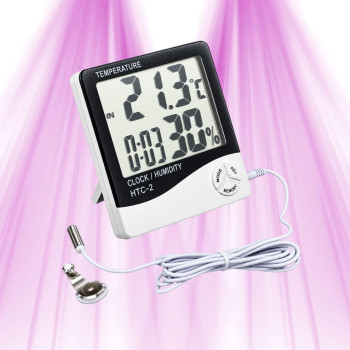






























Hydro-Digitalthermometer – Sonde für Temperatur und Luftfeuchtigkeit
Auf Lager · Versand innerhalb von 24 Std.
21,89 €

Artikel wurde in den Korb gelegt
Ça pousse dans le bon sens

4 Produkte
Ein Thermometer/Hygrometer ist das Auge Ihres Anbauraums. Ohne diese Instrumente ist es unmöglich zu wissen, ob Ihre Pflanzen unter optimalen Bedingungen wachsen. Temperatur und relative Luftfeuchtigkeit sind zwei entscheidende Parameter, die die Gesundheit, das Wachstum und die Widerstandsfähigkeit Ihrer Pflanzen bestimmen. Eine Abweichung von wenigen Grad oder 10% Luftfeuchtigkeit kann den Unterschied zwischen einer außergewöhnlichen Ernte und einem bitteren Misserfolg ausmachen.
Präzision ist das, was Hobbygärtner von Profis unterscheidet. Ein einfaches Hygrometer kann eine Fehlertoleranz von ±5% haben, was enorm ist, wenn man eine relative Luftfeuchtigkeit von 60% in der Blütezeit anstrebt. Hochwertige digitale Modelle erreichen ±2% oder sogar ±1% für die leistungsstärksten. Diese Präzision ermöglicht es Ihnen, Ihre Abluftventilatoren, Luftbefeuchter oder Luftentfeuchter fein abzustimmen.
Die Min/Max-Speicherfunktionen ändern alles. Anstatt ständig zu überwachen, sehen Sie auf einen Blick die Schwankungen über 24 Stunden. Wenn Ihre Temperatur nachts auf 32°C steigt, obwohl Sie 24°C beibehalten wollten, wissen Sie es sofort. Das Gleiche gilt für die Luftfeuchtigkeit, die bei winterlicher Heizung drastisch sinken kann.
Modelle mit externem Sensor bieten enorme Flexibilität. Sie platzieren das Gehäuse außerhalb des Zeltes, um die Daten abzurufen, ohne es öffnen zu müssen, während der Sensor im Herzen des Blätterdachs bleibt. Das 1 bis 3 Meter lange Kabel ermöglicht je nach Modell eine genaue Messung dort, wo es wichtig ist.
Präzision steht über allem. Für die Temperatur reichen ±1°C völlig aus, aber für die Luftfeuchtigkeit sollten Sie maximal ±3% anstreben. Kapazitive Sensoren sind im Laufe der Zeit stabiler als resistive Sensoren, auch wenn sie etwas teurer in der Anschaffung sind.
Das Display macht im Alltag den Unterschied. Ein großes LCD-Display mit großen Ziffern lässt sich auch im Halbdunkel sofort ablesen. Hintergrundbeleuchtete Modelle sind praktisch, verbrauchen aber mehr Batterie. Einige zeigen gleichzeitig Temperatur, Luftfeuchtigkeit, Min/Max und Uhrzeit an – sehr nützlich, um sie mit Ihren Beleuchtungszyklen zu korrelieren.
Der Messbereich muss Ihre tatsächlichen Bedürfnisse abdecken. Für den Indoor-Anbau reichen 0-50°C und 10-99% RH völlig aus. Es ist unnötig, mehr zu bezahlen, um -40°C zu messen, wenn Sie drinnen anbauen! Die Anzeigauflösung ist ebenfalls wichtig: 0,1°C und 1% RH ermöglichen eine feine Steuerung Ihres Klimas.
Die Akkulaufzeit variiert stark je nach Modell. Basisversionen halten 6-12 Monate mit einer AAA-Batterie, während vernetzte oder hintergrundbeleuchtete Modelle alle 2-3 Monate einen Batteriewechsel erfordern. Einige bieten eine Anzeige für niedrigen Batteriestand, um dies zu antizipieren.
Für ein Zelt von 60x60cm oder 80x80cm reicht ein kompaktes Modell mit integriertem Sensor völlig aus. Bevorzugen Sie ein digitales Hygrometer mit Min/Max-Funktion und einer Genauigkeit von ±3% bei der Luftfeuchtigkeit. Das Display sollte von außerhalb des Zeltes ablesbar sein, um ständiges Öffnen zu vermeiden. Modelle unter 20€ sind für den Anfang sehr gut geeignet, mit ausreichend präzisen Sensoren zur Steuerung von Belüftung und Befeuchtung.
Platzieren Sie den Sensor auf Höhe des Blätterdachs, niemals direkt unter der Lampe oder an einer Wand. Ideal ist die Mitte des Raumes, 20-30cm von den Pflanzen entfernt, in einem Bereich, der das allgemeine Mikroklima repräsentiert. Vermeiden Sie direkte Luftströme von Ventilatoren und tote Zonen ohne Zirkulation. Wenn Sie einen externen Sensor verwenden, befestigen Sie ihn mit Klettverschluss oder einer kleinen Halterung, damit er stabil bleibt. Ändern Sie den Standort, wenn Sie die Anordnung der Pflanzen ändern.
Die meisten Hygrometer zeigen die Min/Max-Werte durch Drücken einer speziellen Taste an, oft mit „MIN/MAX“ oder „MEM“ gekennzeichnet. Das Display wechselt zwischen minimaler, maximaler Temperatur und dann minimaler und maximaler Luftfeuchtigkeit. Zum Zurücksetzen halten Sie die Taste 3-5 Sekunden lang gedrückt, bis die Werte wieder auf die aktuellen Messungen umspringen. Einige Modelle haben eine separate „RESET“-Taste. Konsultieren Sie das Handbuch, da der Vorgang je nach Marke variiert.
Das einfache Hygrometer misst nur dort, wo sich das Gehäuse befindet, während das Modell mit externem Sensor die Anzeige vom Sensor trennt. Mit einem externen Sensor platzieren Sie den Sensor im Herzen Ihrer Pflanzen und lesen die Daten von außerhalb des Zeltes ab, ohne die Umgebung zu stören. Das 1-3m lange Kabel bietet enorme Flexibilität, um die Messung präzise zu positionieren. Dies ist besonders nützlich in großen Räumen oder wenn der Zugang schwierig ist.
Hygrometer driften mit der Zeit natürlich ab, besonders in feuchten Umgebungen. Überprüfen Sie die Genauigkeit alle 6 Monate mit einem Salztest: Legen Sie das Hygrometer in einen luftdichten Beutel mit einer Schale feuchten Kochsalzes, es sollte nach 6 Stunden 75% anzeigen. Wenn die Abweichung ±5% überschreitet, kalibrieren Sie (falls möglich) oder notieren Sie die mental anzuwendende Korrektur. Reinigen Sie den Sensor mit einem trockenen Tuch, niemals mit Wasser oder Lösungsmitteln, die den Sensor beschädigen könnten.
Hilfe & Beratung
Zu Thermometer / Hygrometer — klicken Sie auf eine Frage, um die Antwort zu sehen.
Als Experte kann ich Ihnen sagen, dass ein Thermo-Hygrometer absolut essenziell für den Indoor-Anbau ist. Es ermöglicht Ihnen, die Temperatur und die relative Luftfeuchtigkeit in Ihrem Anbauraum in Echtzeit zu überwachen. Diese beiden Parameter sind entscheidend, da sie die Transpiration Ihrer Pflanzen, die Nährstoffaufnahme, die Photosynthese und ihre Krankheitsresistenz direkt beeinflussen. Ohne diese Informationen wären Sie bezüglich der Gesundheit Ihrer Kultur gewissermaßen blind.
Das ist eine ausgezeichnete Frage, und die Antwort variiert je nach Wachstumsstadium Ihrer Pflanzen ein wenig. Im Allgemeinen empfehle ich eine Tagestemperatur zwischen 20 und 28°C und eine Nachttemperatur, die etwas niedriger ist (18-24°C). Für die Luftfeuchtigkeit bevorzugen junge Triebe und Stecklinge eine hohe Luftfeuchtigkeit (60-80%), während Pflanzen im vegetativen Wachstum gut zwischen 50 und 70% gedeihen. Während der Blüte ist es ratsam, sie zwischen 40 und 60% zu halten, um Schimmelprobleme zu vermeiden. Es ist ein empfindliches Gleichgewicht, das es zu finden gilt, aber Ihr Thermo-Hygrometer wird Ihnen helfen, es aufrechtzuerhalten.
Wenn ich meine Kunden berate, lege ich Wert auf einige Schlüsselpunkte. Erstens ist die Genauigkeit von größter Bedeutung; eine Abweichung von wenigen Grad oder Prozent kann Auswirkungen haben. Dann achte ich auf die Zuverlässigkeit und Haltbarkeit des Sensors. Ein Modell mit einer Min/Max-Funktion ist sehr praktisch, um die Schwankungen über 24 Stunden zu verfolgen. Schließlich ist die Ablesbarkeit, ob digital mit großem Display oder analog für seine Einfachheit, ein wichtiges Kriterium. Wenn Sie mehrere Zonen überwachen müssen, kann ein Modell mit externem Sensor sehr nützlich sein.
Das ist eine häufige und sehr wichtige Frage! Um repräsentative Messwerte zu erhalten, empfehle ich, Ihr Thermo-Hygrometer auf Höhe des Blätterdachs Ihrer Pflanzen zu platzieren, d.h. auf Höhe der oberen Blätter. Vermeiden Sie es, es direkt unter eine Lichtquelle oder in die Nähe eines Luftein-/auslasses zu stellen, da dies die Messwerte verfälschen würde. Wenn Sie ein großes Zelt haben, empfehle ich sogar, mehrere zu verwenden, um einen umfassenderen Überblick über die Umgebungsbedingungen zu erhalten.
Wenn ich für den Indoor-Anbau wählen müsste, würde ich mich eindeutig für ein digitales Modell entscheiden. Sie sind in der Regel präziser, dank ihres digitalen Displays leichter ablesbar und viele bieten zusätzliche Funktionen wie die Speicherung von Min/Max-Werten, Alarme oder sogar externe Sensoren. Analoge Modelle sind einfacher und benötigen keine Batterien, aber ihre Ablesung ist weniger präzise und sie bieten nicht so viele Funktionen. Für eine optimale Kontrolle ist digital der richtige Weg.
Das ist eine ausgezeichnete Frage, um die Zuverlässigkeit Ihrer Daten sicherzustellen. Für die Temperatur können Sie es mit einem vertrauenswürdigen medizinischen Thermometer vergleichen oder es in Eiswasser legen (das 0°C haben sollte). Für die Luftfeuchtigkeit ist eine einfache Methode der gesättigte Salztest: Geben Sie angefeuchtetes Speisesalz in einen kleinen, versiegelten Behälter mit Ihrem Hygrometer. Nach einigen Stunden sollte die Luftfeuchtigkeit etwa 75% anzeigen. Wenn Ihr Gerät weit von diesem Wert entfernt ist, muss es möglicherweise neu kalibriert oder ersetzt werden. Ich empfehle, die Genauigkeit Ihrer Instrumente regelmäßig zu überprüfen.
Was ich oft sehe, ist eine Vernachlässigung der Tag-/Nachtschwankungen. Es ist entscheidend, einen guten Delta zwischen Tag und Nacht aufrechtzuerhalten. Ein weiterer Fehler ist, die Luftfeuchtigkeit während der Blüte zu hoch zu lassen, was Schimmel begünstigt. Umgekehrt kann eine zu niedrige Luftfeuchtigkeit die Pflanzen stressen und ihr Wachstum verlangsamen. Vermeiden Sie auch 'Hot Spots' oder 'Cold Spots' in Ihrem Raum, indem Sie eine gute Luftzirkulation gewährleisten. Ihr Thermo-Hygrometer hilft Ihnen, diese Probleme zu erkennen, bevor sie kritisch werden.
Ihre Antwort nicht gefunden? 01 88 33 45 52 oder per Nachricht.

Umtausch innerhalb
von 14 Tagen

Kostenloser Versand
ab 100€*

Lieferung
in 24 bis 48 Stunden

Sichere
Zahlung

Zahlungserleichterung

Bestpreisgarantie

GrowLED
Garantie

Treuepunkte