





























Horticulture Lighting Group
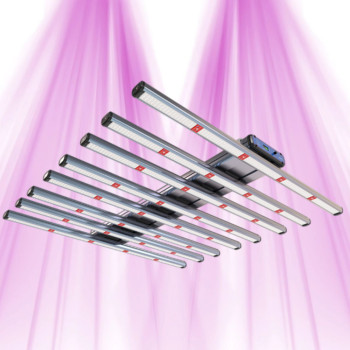
HLG Scorpion Ultima X Diablo Lampe - Reflektorserie
Versand innerhalb von 2 Wochen
2 749,08 € oder 3× 916,36 €

Artikel wurde in den Korb gelegt
Ça pousse dans le bon sens

5 Produkte
800W LEDs stellen die Königsklasse der Pflanzenbeleuchtung für den Indoor-Anbau dar. Diese Leistung ermöglicht es, Anbauflächen von 1,5 bis 2 m² effektiv mit ausreichender Lichtintensität zu versorgen, um hohe Erträge zu erzielen. Im Gegensatz zu älteren HPS-Technologien, die mehr Energie verbrauchen und enorme Wärme abgeben, bieten 800W LEDs ein optimiertes Lichtspektrum und eine bemerkenswerte Energieeffizienz.
Mit einem tatsächlichen Verbrauch, der je nach Modell zwischen 320 und 400W liegt, liefern diese Leuchten eine PPFD (Photosynthetische Photonenflussdichte) von 800 bis 1200 µmol/m²/s in 60 cm Entfernung. Das ist genau das, was Sie brauchen, um Ihre Pflanzen in der Wachstums- oder Blütephase zu ihrem vollen Potenzial zu bringen.
Ehrlich gesagt, wenn man eine 800W LED mit einer 1000W HPS vergleicht, ist der Unterschied eklatant. Zunächst der Stromverbrauch: Wo eine HPS tatsächlich 1000W verbraucht, benötigt eine 800W LED nur 350-400W für eine gleichwertige oder sogar höhere Lichtausbeute. Das macht einen riesigen Unterschied bei der Stromrechnung!
Das Lichtspektrum ist der entscheidende Faktor. 800W LEDs integrieren in der Regel Vollspektrum-Dioden mit Spitzen im Rotbereich (660nm) und Blau (450nm), plus Fernrot (730nm) zur Stimulierung der Blüte. Einige Modelle fügen sogar UV-A (385nm) und Infrarot (850nm) hinzu, um die Harzproduktion zu steigern. Das Ergebnis: kompaktere Pflanzen, kürzere Internodien und eine dichtere Blüte.
In Bezug auf das Wärmemanagement ist es Tag und Nacht im Vergleich zu HPS. Eine 800W LED gibt 3 bis 4 Mal weniger Wärme ab, was die Belüftung erheblich vereinfacht. Keine überdimensionierten Abluftventilatoren mehr, die auf Hochtouren laufen! Ein einfacher Abluftventilator mit 400-500 m³/h reicht völlig aus, um die Restwärme in einem 150x150 cm Zelt abzuführen.
Erstes Kriterium: die Lichtausbeute, ausgedrückt in µmol/J. Die besten 800W LEDs erreichen 2,7 bis 3,0 µmol/J, was bedeutet, dass sie Elektrizität sehr effizient in für Pflanzen nutzbares Licht umwandeln. Unter 2,5 µmol/J sollten Sie die Finger davon lassen.
Die Qualität der Dioden macht den Unterschied. Bevorzugen Sie anerkannte Marken wie Samsung LM301B/H, Osram oder Bridgelux. Diese Dioden behalten ihre Intensität länger (mindestens 50.000h) und bieten ein stabileres Spektrum über die Zeit. LEDs mit „No-Name“-Dioden verlieren schnell an Effizienz.
Der Treiber (Transformator) muss dimmbar und von einer renommierten Marke sein: Meanwell, Inventronics oder Sosen. Ein guter Treiber ermöglicht die Einstellung der Intensität von 10 bis 100% und gewährleistet eine stabile Stromversorgung ohne Schwankungen. Dies ist entscheidend für die Langlebigkeit Ihrer Dioden.
Was die Kühlung betrifft, stellen Sie sicher, dass die LED über einen ausreichend dimensionierten Aluminiumkühlkörper verfügt. Einige Modelle verfügen über leise Ventilatoren (weniger als 30dB), andere setzen auf passive Kühlung. Beide Ansätze funktionieren, aber die passive Kühlung ist langfristig zuverlässiger.
Eine 800W LED deckt optimal eine Fläche von 1,5 bis 2 m² (150x150 cm oder 120x180 cm) ab. Für eine homogene Abdeckung hängen Sie die LED mittig im Raum in einer Höhe von 60-80 cm auf. Über 2 m² wird die Lichtintensität am Rand unzureichend, und Sie riskieren weniger produktive Zonen. Wenn Ihre Fläche 2,5 m² oder mehr beträgt, ist es besser, zwei LEDs mit geringerer Leistung zu wählen als eine einzelne 800W.
In der Blütephase halten Sie einen Abstand von 50 bis 70 cm zwischen der 800W LED und dem Blätterdach ein. Dieser Abstand ermöglicht eine PPFD von 900-1200 µmol/m²/s, ideal zur Maximierung der Blütenproduktion. Wenn Sie Anzeichen von Lichtstress bemerken (Blätter werden weiß, Ränder bräunen sich), heben Sie die LED um 10-15 cm an. Umgekehrt, wenn die Pflanzen zu stark in die Höhe schießen, nähern Sie die Beleuchtung leicht an. Verwenden Sie ein Luxmeter oder einen PPFD-Sensor, um die von Ihren Pflanzen empfangene Intensität genau zu messen.
Absolut! Eine 800W LED verbraucht 350-400W real gegenüber 1000W bei der HPS, was einer Energieeinsparung von 60% entspricht. Die photonische Ausbeute ist höher: 2,7 µmol/J für eine gute LED gegenüber 1,7 µmol/J für eine HPS. In Bezug auf die Produktion erzielen Sie mit der LED gleichwertige oder sogar bessere Ergebnisse, während die Wärmeerzeugung um das Dreifache reduziert wird. Die Lebensdauer ist ebenfalls unvergleichlich: 50.000h für die LED gegenüber maximal 10.000h für eine HPS-Lampe.
Die Installation einer 800W LED ist viel einfacher als die einer HPS. Hängen Sie sie mit verstellbaren Gurten an die obere Schiene Ihres Zeltes, wobei Sie 20-30 cm Abstand zwischen der LED und der Decke für die Luftzirkulation lassen. Ein Abluftventilator mit 400-500 m³/h reicht völlig aus, um die Restwärme abzuführen. Positionieren Sie die Frischluftzufuhr unten im Zelt, gegenüber der Abluft. Wenn Ihre LED über einen externen Treiber verfügt, platzieren Sie diesen außerhalb des Zeltes, um die interne Wärme weiter zu reduzieren. Mit dieser Konfiguration bleibt die Temperatur auch im Sommer leicht unter 28°C.
Eine monatliche Reinigung reicht aus, um die Effizienz Ihrer 800W LED aufrechtzuerhalten. Schalten Sie die Beleuchtung aus und ziehen Sie den Stecker, warten Sie, bis sie vollständig abgekühlt ist. Verwenden Sie ein leicht feuchtes Mikrofasertuch, um die Diodenlinsen und den Kühlkörper vorsichtig zu reinigen. Vermeiden Sie aggressive Chemikalien, die die Komponenten beschädigen könnten. Ein weicher Pinsel hilft, Staub in den Ecken zu entfernen. Staub kann die Lichtausbeute nach einigen Monaten um 10 bis 15% reduzieren, daher ist diese regelmäßige Reinigung wichtig. Überprüfen Sie auch, ob die Ventilatoren (falls vorhanden) frei laufen und nicht blockiert sind.
Hilfe & Beratung
Zu 800W — klicken Sie auf eine Frage, um die Antwort zu sehen.
Der Unterschied zwischen einer 800W LED und einer HPS ist ziemlich ausgeprägt. 800W LEDs sind viel energieeffizienter und verbrauchen weniger für eine gleichwertige oder höhere Lichtleistung. Sie erzeugen auch viel weniger Wärme, was die Klimaregelung in Ihrem Anbauraum vereinfacht und den Belüftungsbedarf reduziert. Darüber hinaus bieten LEDs ein optimiertes und anpassbares Lichtspektrum, während HPS ein begrenzteres Spektrum haben. Wenn ich heute wählen müsste, würde ich ohne zu zögern LEDs wegen ihrer Modernität und Leistung bevorzugen. Ich erkläre die Vorteile von LEDs gegenüber älteren Technologien ausführlicher in diesem Artikel.
Eine 800W LED ist als primäre und leistungsstarke Lichtquelle für Ihre Indoor-Kulturen konzipiert. Ihre Aufgabe ist es, die notwendige Lichtintensität für alle Lebensphasen der Pflanze zu liefern, von der Keimung über das vegetative Wachstum bis zur Blüte. Sie ermöglicht hohe Erträge auf großen Flächen, typischerweise zwischen 1,5 und 2 m². In der Praxis ersetzt sie vorteilhaft mehrere Lampen geringerer Leistung oder eine leistungsstarke HPS, mit besserer Energie- und Wärmeregelung.
Im Allgemeinen kann eine 800W LED eine Anbaufläche von 1,5 m² bis 2 m² effizient abdecken. Dies ist eine Leistung, die eine ausgezeichnete Lichtdurchdringung auch bei dichten Kulturen ermöglicht. Die genaue Fläche kann jedoch je nach Optik der LED, ihrer Effizienz und der Art der Kultur leicht variieren. Ich empfehle immer, die Spezifikationen des Herstellers für eine genaue Schätzung der optimalen Abdeckungsfläche zu konsultieren.
Der Installationsabstand einer 800W LED zu Ihren Pflanzen ist entscheidend, um Lichtstress (Verbrennungen) oder umgekehrt einen Mangel an Intensität zu vermeiden. Im Allgemeinen rate ich, mit einem Abstand von etwa 40 bis 60 cm zu den Blättern zu beginnen, insbesondere in der Wachstumsphase. In der Blütezeit können Sie sie möglicherweise etwas näher bringen, etwa 30 bis 45 cm, während Sie Ihre Pflanzen sorgfältig beobachten. Ideal ist es, ein Photometer zu verwenden, um den PPFD zu messen und die Höhe entsprechend den spezifischen Bedürfnissen Ihrer Arten und ihres Entwicklungsstadiums anzupassen.
Der Unterschied zwischen einem Wachstums- und Blütespektrum für eine 800W LED liegt im Anteil der verschiedenen emittierten Lichtfarben. Für das Wachstum wird ein blau-reiches Spektrum bevorzugt, da es die vegetative Entwicklung, robuste Stängel und dichtes Laub fördert. Für die Blüte wird der Anteil an Rot und Fernrot erhöht, was die Produktion von Blüten und Früchten stimuliert. Viele moderne 800W LEDs bieten ein vollständiges Spektrum oder die Möglichkeit, diese Anteile über Dimmer oder spezielle Schalter anzupassen, was ein erheblicher Vorteil ist, um jede Anbauphase zu optimieren.
Für eine 800W LED in der Blütephase strebe ich im Allgemeinen einen PPFD (Photosynthetic Photon Flux Density) zwischen 800 und 1000 µmol/m²/s auf Höhe des Blätterdachs an. In diesem Bereich erreichen die meisten blühenden Pflanzen ihr maximales Produktionspotenzial. Es ist wichtig zu beachten, dass einige Pflanzen leicht höhere Intensitäten tolerieren können, aber man sollte immer auf Anzeichen von Stress achten. Ich empfehle die Verwendung eines PPFD-Messgeräts für präzise Messungen und die entsprechende Anpassung der Höhe oder Leistung Ihrer LED.
Ihre Antwort nicht gefunden? 01 88 33 45 52 oder per Nachricht.

Umtausch innerhalb
von 14 Tagen

Kostenloser Versand
ab 100€*

Lieferung
in 24 bis 48 Stunden

Sichere
Zahlung

Zahlungserleichterung

Bestpreisgarantie

GrowLED
Garantie

Treuepunkte