






























VDL
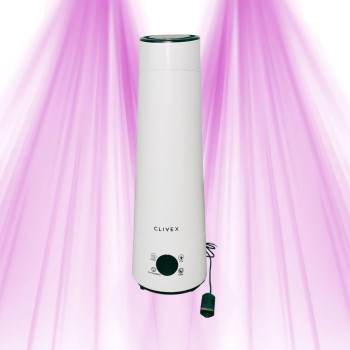
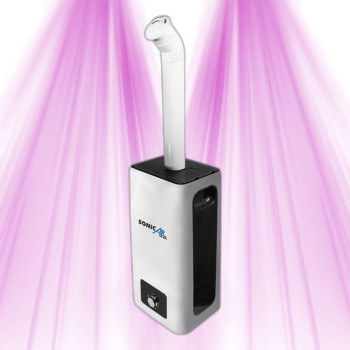
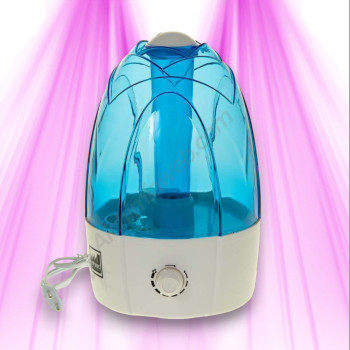
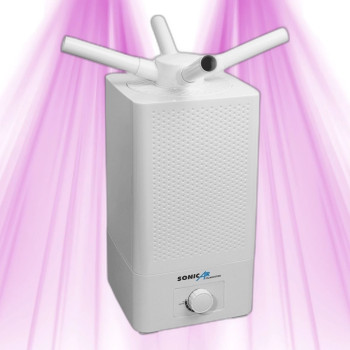
VDL Cool Mist 2.0 4 L – Ultraschall-Luftbefeuchter
In 2 Modellen erhältlich
Auf Lager · Versand innerhalb von 24 Std.
39,90 €

Artikel wurde in den Korb gelegt
Ça pousse dans le bon sens

8 Produkte
Humidifiers for green plants are essential equipment for maintaining optimal humidity levels in your indoor growing spaces. Whether you're cultivating tropical plants, herbs, or vegetables indoors, these devices precisely regulate air humidity to promote healthy and vigorous growth. In an enclosed environment like a grow tent or grow room, the air can quickly become too dry, especially with artificial lighting that generates heat.
Relative humidity plays a crucial role in plant development. Most tropical species need a humidity level between 60% and 80% to thrive. Without a humidifier, your plants may show signs of water stress: browning leaf edges, stunted growth, or, worse, complete drying out of young shoots. A good humidifier helps create a stable microclimate that mimics natural growing conditions.
Modern humidifiers also offer precise control thanks to their integrated humidistats. You can set the desired humidity level to the nearest degree, and the device will automatically turn on as soon as the air becomes too dry. This automation prevents sudden humidity variations that can stress your crops. Furthermore, properly humidified air facilitates nutrient absorption by the roots and improves gas exchange at the stomata.
The choice of a humidifier primarily depends on the size of your growing space. For a 1m² tent, a 2 to 3-liter capacity humidifier is more than sufficient. For larger spaces (4m² and up), opt for 5 to 8-liter models with a higher mist output, generally expressed in ml/h. Also check the autonomy: a 6-liter tank can operate 12 to 15 hours continuously depending on the setting.
The technology used directly influences performance. Ultrasonic humidifiers produce a fine, cool mist through high-frequency vibrations. They are quiet and energy-efficient, perfect for noise-sensitive crops. Evaporative models use a fan to diffuse humidity through a soaked filter. They consume more energy but offer more homogeneous diffusion throughout the space.
Also consider practical features: mist intensity adjustment, automatic shut-off when the tank is empty, remote control to adjust settings without opening the tent. An integrated digital hygrometer allows you to monitor ambient humidity levels in real-time. Some models even offer time-slot programming, which is very useful for adapting humidity to your plants' day/night cycles.
For a 1m² tent, a 2 to 3-liter ultrasonic humidifier with a flow rate of 200 to 300 ml/h is perfectly suitable. Tropical plants require 60 to 80% relative humidity, so opt for a model with an integrated humidistat to automatically maintain this level. Place the humidifier in a corner of the tent, about 50 cm from the plants to prevent droplets from settling directly on the foliage. A model with intensity adjustment will allow you to fine-tune according to your crops' needs.
Correct humidifier installation requires good air circulation to avoid stagnant humid areas. Always place the device away from plants (minimum 40-50 cm) and direct the mist upwards or to the side, never directly onto the leaves. Ensure you have active ventilation with an extractor that renews the air regularly. An oscillating fan helps homogenize humidity throughout the space. Monitor humidity daily with a thermo-hygrometer: if it exceeds 85%, reduce intensity or increase ventilation.
An ultrasonic humidifier uses high-frequency vibrations (1.7 MHz) to transform water into micro-droplets, creating a very fine cool mist. It is quiet (less than 35 dB), energy-efficient, and produces rapid and precise humidification. An evaporative humidifier works with a fan that draws dry air through a wet filter, creating natural evaporation. It consumes more energy but offers more gradual and homogeneous diffusion, without the risk of mineral deposits. For indoor crops, ultrasonic is generally preferred for its discretion and immediate effectiveness.
Demineralized or distilled water is highly recommended, especially with ultrasonic humidifiers. Tap water contains minerals (calcium, magnesium) that turn into white powder when the water evaporates, settling on leaves and potentially clogging stomata. This mineral powder can also damage the humidifier mechanism in the long term. Demineralized water costs about 1€ per liter in supermarkets, a minimal investment compared to the benefits for your plants. If you use tap water, clean the humidifier more frequently and monitor for white deposits on the foliage.
Weekly cleaning significantly extends the life of your humidifier. Completely empty the tank and clean it with a mixture of hot water and white vinegar (3:1 ratio) to dissolve limescale deposits. Let it sit for 15 minutes, then rinse thoroughly. The ultrasonic membrane requires delicate cleaning with a soft brush and diluted vinegar. Replace filters according to the manufacturer's recommendations, generally every 3 to 6 months depending on usage. Between prolonged uses, completely dry all components to prevent bacterial growth. Rigorous maintenance ensures optimal operation and healthy mist for your crops.
In 2 Modellen erhältlich
In 2 Modellen erhältlich
In 2 Modellen erhältlich
In 2 Modellen erhältlich
In 2 Modellen erhältlich
Hilfe & Beratung
Zu Humidifiers for green plants — klicken Sie auf eine Frage, um die Antwort zu sehen.
Als Experte kann ich Ihnen sagen, dass ein Luftbefeuchter unerlässlich ist, um eine optimale Luftfeuchtigkeit in Ihrem Indoor-Anbauraum aufrechtzuerhalten. Pflanzen, insbesondere tropische, benötigen eine hohe Umgebungsfeuchtigkeit, um sich gut zu entwickeln, richtig zu atmen und Wasserstress zu vermeiden. Ohne Luftbefeuchter kann die Raumluft zu trocken werden, was das Wachstum verlangsamt und die Pflanzen anfälliger für Krankheiten macht.
Die ideale Luftfeuchtigkeit variiert je nach Art, aber im Allgemeinen empfehle ich, für die meisten Zimmerpflanzen eine Luftfeuchtigkeit zwischen 50% und 70% anzustreben. Für tropische Pflanzen oder Sämlinge kann sie sogar bis zu 80% betragen. Ein gutes Hygrometer hilft Ihnen, diesen Wert zu überwachen und ihn mit Ihrem Luftbefeuchter anzupassen, um perfekte Bedingungen zu schaffen.
Bei der Auswahl eines Luftbefeuchters rate ich Ihnen, die Größe Ihres Anbauraums und die spezifischen Bedürfnisse Ihrer Pflanzen zu berücksichtigen. Achten Sie auf die Tankkapazität, die Autonomie, das Vorhandensein eines integrierten Hygrostat für die automatische Regulierung und den Geräuschpegel. Für eine Growbox erkläre ich detaillierter, wie man sie auswählt, in diesem Artikel, und der Luftbefeuchter ist ein Schlüsselbestandteil davon.
In der Praxis werden die beiden Begriffe oft synonym verwendet, aber es gibt einen Unterschied. Ein Luftbefeuchter ist dazu gedacht, die allgemeine Luftfeuchtigkeit in einem Raum zu erhöhen und aufrechtzuerhalten. Ein Vernebler, oft kleiner, kann verwendet werden, um bestimmte Bereiche gezielt zu befeuchten oder für eine sehr lokalisierte und temporäre Feuchtigkeitszufuhr, wie z.B. für Stecklinge. Für eine ernsthafte Indoor-Kultur empfehle ich einen Luftbefeuchter für eine stabile und kontinuierliche Regulierung.
Ich empfehle, den Luftbefeuchter in der Mitte Ihres Anbauraums oder an einem Ort zu platzieren, an dem sich der Nebel gleichmäßig verteilen kann. Vermeiden Sie es, ihn zu nah an den Pflanzen zu positionieren, um das Laub nicht lokal zu sättigen, was die Entwicklung von Pilzen fördern könnte. Stellen Sie außerdem sicher, dass er auf einer stabilen Oberfläche steht und die Steckdosen vor Feuchtigkeit geschützt sind. Ziel ist eine homogene Feuchtigkeitsverteilung.
Der häufigste Fehler, den ich sehe, ist, das Gerät nicht regelmäßig zu reinigen. Stehendes Wasser kann zu einem Nährboden für Bakterien und Schimmel werden, die der Luftbefeuchter dann in die Luft abgibt. Ein weiterer Fehler ist die Nichtverwendung von demineralisiertem oder gefiltertem Wasser, was zu Kalkablagerungen auf Ihren Pflanzen und dem Gerät führen und dessen Wirksamkeit verringern kann. Denken Sie daran, den Tank immer mit sauberem Wasser zu füllen.
Für eine gute Pflege empfehle ich Ihnen, den Tank täglich zu leeren und auszuspülen, wenn möglich, und ihn mindestens einmal pro Woche gründlich zu reinigen. Verwenden Sie eine Mischung aus Wasser und weißem Essig, um Kalk zu entfernen und die Oberflächen zu desinfizieren. Vergessen Sie nicht, auch die Filter zu reinigen, falls Ihr Modell welche besitzt. Regelmäßige Wartung gewährleistet eine optimale Leistung und eine längere Lebensdauer Ihres Geräts.
Ihre Antwort nicht gefunden? 01 88 33 45 52 oder per Nachricht.

Umtausch innerhalb
von 14 Tagen

Kostenloser Versand
ab 100€*

Lieferung
in 24 bis 48 Stunden

Sichere
Zahlung

Zahlungserleichterung

Bestpreisgarantie

GrowLED
Garantie

Treuepunkte