




























Lumatek
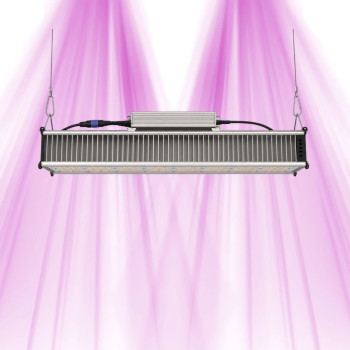
Lumatek Zeus 600W PRO 3.1 – Multi-Bar-System von Lumatek – Komplett verkauft
In 5 Modellen erhältlich
Auf Lager · Versand innerhalb von 24 Std.
1 089,00 € oder 3× 363,00 €

Artikel wurde in den Korb gelegt
Ça pousse dans le bon sens

14 Produkte
HPS and MH lamps of 600-700 watts represent the high-end of traditional indoor grow lighting. This power range offers exceptional light output to effectively cover grow spaces of 1.2 to 1.5 m². Whether it's HPS (High Pressure Sodium) for flowering or MH (Metal Halide) for vegetative growth, these lamps deliver the necessary light intensity for generous harvests.
The 600-700W power range is the sweet spot for experienced growers who want to maximize their yields. A 600W HPS lamp produces approximately 90,000 lumens, which is a light density of 150W/m² in a 1.2x1.2m space. This intensity allows for yields of 400 to 600g/m² depending on the varieties grown.
The light spectrum of MH lamps (4200K) promotes compact vegetative growth with short internodes, while the HPS spectrum (2100K) stimulates the production of dense, resinous flowers. The heat generated (approximately 2050 BTU/h for a 600W) can even be an advantage in winter to maintain an optimal temperature of 24-26°C in the grow space.
Unlike LEDs, which require a higher initial investment, HPS/MH 600-700W lamps offer excellent value for money with bulbs available between 15 and 40€. Their proven technology, used for decades, guarantees predictable and consistent results.
The choice between 600W and 700W primarily depends on your grow space. For a 120x120cm tent, a 600W is more than sufficient. Beyond 140x140cm, opt for a 700W or two 600W for homogeneous distribution. Check that your electrical installation can handle the consumption: count 650W actual for a lamp advertised as 600W with the ballast.
The type of ballast directly influences performance. Electronic ballasts allow for power variation (400W/600W/660W) and generate less heat than magnetic ballasts. For ventilation, plan for an extractor of at least 400-500 m³/h with a ventilated reflector like a Cool Tube or Adjust-A-Wing.
As for bulbs, prefer renowned brands like Philips Son-T Plus or Osram Plantastar. A 600W HPS bulb has a lifespan of 10,000 to 15,000 hours, but its efficiency decreases after 6-8 months of intensive use. Replace it annually to maintain optimal yield.
A 600W HPS lamp perfectly covers a 120x120cm space, or 1.44 m². To optimize light penetration, do not exceed 140x140cm with a 600W. A 700W can cover up to 150x150cm but with slightly reduced light density. In a larger space, it is better to install two 600W lamps spaced 80-100cm apart for homogeneous distribution. The ceiling height must be at least 2 meters to respect safety distances.
During vegetative growth, maintain 60-80cm between the lamp and the top of the plants to avoid heat stress. During flowering, you can lower it to 40-50cm if ventilation is sufficient and the leaf temperature remains below 28°C. Use the hand test: if you feel uncomfortable heat after 30 seconds, it's too close. With a ventilated reflector like a Cool Tube, you can reduce these distances by 10-15cm.
600W MH lamps emit a blue-white spectrum (4200K) rich in UV, ideal for the vegetative phase as it promotes compact growth and thick leaves. 600W HPS lamps produce an orange-red spectrum (2100K) that stimulates flowering and resin production. In terms of light output, a 600W HPS produces 90,000 lumens compared to 60,000 for an equivalent MH. Some growers use both: MH for vegetative growth then HPS for flowering.
A reflector is essential to optimize light distribution. Basic models like hammered reflectors are suitable, but Cool Tubes or Air Coolers allow direct heat extraction from the bulb. For ventilation, count a minimum of 400 m³/h extraction with a ventilated reflector, or 600 m³/h with a classic reflector. An oscillating fan of 30-40cm improves air circulation and strengthens stems. Intake should represent 80% of the extraction flow rate.
Clean the bulb every 4-6 weeks with isopropyl alcohol and a microfiber cloth, when the bulb is cold and the installation is unplugged. Dust and residues reduce light efficiency by 10-15%. Avoid touching the bulb with bare hands as grease marks create hot spots. Regularly check the ballast connections and replace the bulb as soon as it flickers or changes color. A well-maintained HPS bulb retains 90% of its initial output for 8-10 months of 12h/day use.
In 5 Modellen erhältlich
In 3 Modellen erhältlich
In 3 Modellen erhältlich
In 7 Modellen erhältlich
In 3 Modellen erhältlich
In 3 Modellen erhältlich
In 2 Modellen erhältlich
In 3 Modellen erhältlich
In 3 Modellen erhältlich
In 3 Modellen erhältlich
In 4 Modellen erhältlich
Hilfe & Beratung
Zu 600 - 700 Watts — klicken Sie auf eine Frage, um die Antwort zu sehen.
Der grundlegende Unterschied liegt in ihrem Lichtspektrum. MH (Metallhalogenid)-Lampen emittieren ein blaueres Spektrum, ideal für die vegetative Wachstumsphase Ihrer Pflanzen, was eine kompakte und robuste Entwicklung fördert. HPS (High Pressure Sodium)-Lampen hingegen erzeugen ein orangeroteres Spektrum, perfekt für die Blüte und Fruchtbildung, da sie die Produktion von Blüten und Früchten anregen. In der Praxis empfehle ich oft, beide zu verwenden, um jede Phase des Pflanzenlebenszyklus zu optimieren.
Für diesen Leistungsbereich empfehle ich in der Regel Anbauräume von 1,2 m² bis 1,5 m². Wenn Ihr Raum kleiner ist, könnte eine Lampe dieser Leistung zu viel Wärme und Lichtintensität erzeugen, was Ihre Pflanzen stressen könnte. Bei einem größeren Raum riskieren Sie eine ungleichmäßige Lichtverteilung. Ich gehe davon aus, dass jedes Watt effizient genutzt werden muss, um einen optimalen Ertrag zu erzielen.
Ja, das ist möglich, aber nicht ideal, um Ihre Erträge zu maximieren. Wenn ich nur eine Lampe für den gesamten Zyklus wählen müsste, würde ich zu einer gemischten HPS-Lampe tendieren, die ein etwas ausgewogeneres Spektrum bietet. Für optimale Ergebnisse empfehle ich jedoch, eine MH-Lampe für das Wachstum zu verwenden und dann auf eine HPS-Lampe für die Blüte umzusteigen. Das sehe ich oft bei erfahrenen Züchtern, die jede Phase optimieren möchten.
Der häufigste Fehler ist ein schlechtes Wärmemanagement. Diese Lampen erzeugen viel Wärme, daher ist eine gute Belüftung und Abluft entscheidend. Ein weiterer Fehler ist, die Lampe zu nah an die Pflanzen zu stellen, was zu Verbrennungen führen kann. Ich rate immer dazu, die Temperatur auf Höhe des Blätterdachs zu überprüfen. Und vergessen Sie nicht, Ihre Glühbirnen regelmäßig auszutauschen, da ihre Effizienz mit der Zeit abnimmt.
Für eine optimale Installation empfehle ich Ihnen, zunächst sicherzustellen, dass Sie ein kompatibles Vorschaltgerät für die Leistung Ihrer Glühbirne haben. Verwenden Sie dann einen hochwertigen Reflektor, um das Licht gut zu streuen und Hotspots zu vermeiden. Hängen Sie Ihre Lampe in einer verstellbaren Höhe auf, damit Sie sie während des Pflanzenwachstums anpassen können. Und vor allem, vergessen Sie nicht ein gutes Abluftsystem zur Wärmeregulierung, das ist entscheidend für die Gesundheit Ihrer Kulturen.
Im Allgemeinen hat eine HPS- oder MH-Glühbirne dieser Leistung eine Nutzungsdauer von etwa 10.000 bis 20.000 Betriebsstunden. Es ist jedoch wichtig zu beachten, dass ihre Lichtausbeute, d.h. die Menge an Licht, die sie produzieren, lange vor dem Ende ihrer Lebensdauer abnimmt. Ich rate oft dazu, sie nach 3 bis 4 Blütezyklen auszutauschen, um einen optimalen Ertrag zu gewährleisten, auch wenn sie noch funktionieren.
Ihre Antwort nicht gefunden? 01 88 33 45 52 oder per Nachricht.

Umtausch innerhalb
von 14 Tagen

Kostenloser Versand
ab 100€*

Lieferung
in 24 bis 48 Stunden

Sichere
Zahlung

Zahlungserleichterung

Bestpreisgarantie

GrowLED
Garantie

Treuepunkte