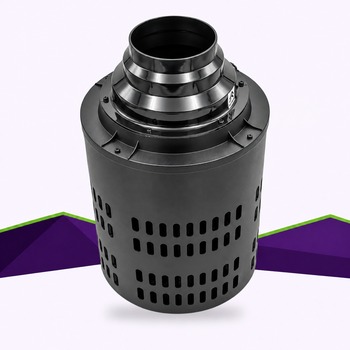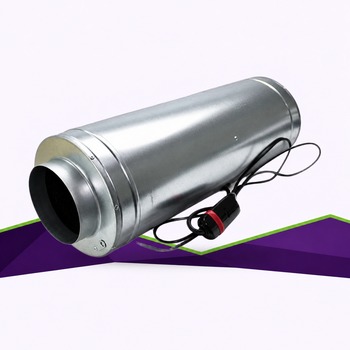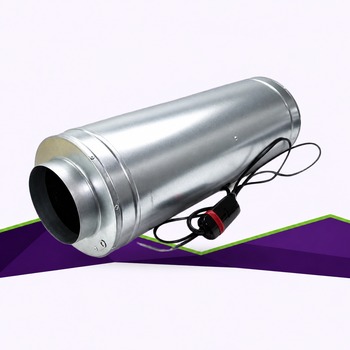
























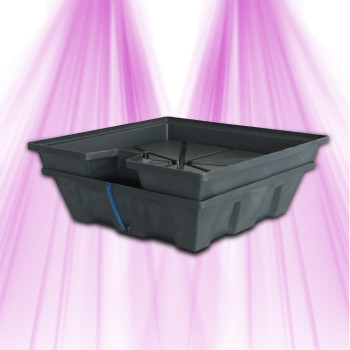







Silent Pack - Extractor M 150mm 550m3/h - ProActiv carbon filter 150mm 840m3/h
Versand innerhalb von 2 Wochen
420,82 € 442,97 € oder 3× 140,27 €

Artikel wurde in den Korb gelegt
Ça pousse dans le bon sens

21 Produkte
Silent extractors are revolutionizing climate control in indoor growing. Say goodbye to noisy disturbances that give away your setup! These specially designed fans incorporate insulating materials and anti-vibration technologies to drastically reduce noise, while maintaining optimal airflow for your plants.
Noise is the number one enemy of the discreet grower. A classic extractor can easily exceed 50 dB, the level of a normal conversation. With a silent model, you often drop below 35 dB, comparable to the sound of a library. The TT Silent M Extractor - 150mm - 405/550m3/h - 2 Silent Speeds perfectly illustrates this approach: its double insulated wall and high-quality bearings guarantee almost silent operation even at full power.
Beyond acoustic comfort, these extractors retain all their efficiency. Airflows remain high - up to 870m3/h for the ISO-MAX 200mm - CAN FILTER - 870m3/h - allowing for optimal air renewal. The two-speed technology offers perfect modulation depending on the growth phases. During the night or flowering period, you can reduce the speed without compromising ventilation.
Diameter is key: 125mm for spaces from 60x60cm to 100x100cm, 150mm for 120x120cm tents, and 200mm for larger installations. Airflow is calculated simply: volume of your space x 60 for complete hourly renewal. For a 1.2x1.2x2m tent (2.88m3), aim for a minimum of 170m3/h. The TT Silent M Extractor - 125mm - 230/340m3/h - 2 Silent Speeds is perfectly suited for this type of setup.
Static pressure matters greatly. If you add a carbon filter and several meters of ducting, your extractor loses efficiency. Plan for a 20 to 30% margin on the theoretical airflow. Two-speed models offer this valuable flexibility to adapt to variations in circuit resistance.
For a 1.2x1.2x2m (2.88m3) tent, the TT Silent M 125mm extractor with its maximum 340m3/h is perfectly suitable. This airflow allows for air renewal approximately every 30 seconds, ideal for maintaining stable temperature and humidity. Its dual speed allows you to adapt the flow according to needs: reduced speed at night to limit noise, maximum speed during the day to evacuate heat from the lamps. The 125mm diameter adapts to standard ducts and facilitates installation with most carbon filters on the market.
The basic formula: space volume (L x W x H) multiplied by 60 for complete renewal per minute. For a 3m3 space, count a minimum of 180m3/h. Add 20-30% if you use a carbon filter, and another 10-15% for each duct bend. During hot periods or with powerful HPS lamps, do not hesitate to double this airflow. Variable speed extractors like the TT Silent M allow for this modulation without changing equipment.
The main difference lies in sound insulation and bearings. TT Silent models incorporate a double wall with insulating material that reduces vibrations and absorbs noise. Their high-quality ball bearings generate less friction and therefore less noise pollution. In terms of performance, airflows remain identical or even superior thanks to better internal aerodynamics. The extra cost is quickly justified if you are growing in an apartment or in an environment where acoustic discretion is paramount.
Mount the extractor high up, ideally suspended by elastic straps to prevent vibration transmission. Connect the ducting on the intake side (inside the tent) and the exhaust side (external discharge). Use airtight clamps and avoid sharp bends that create noisy turbulence. If possible, place the extractor outside the tent to further reduce perceived noise. Acoustic ducts provide an additional gain of 3-5 dB across the entire circuit.
Dust the blades every 2-3 months with a brush or dry cloth. Check the condition of the bearings: abnormal noise indicates premature wear. Clean the outer casing with a damp cloth, without aggressive chemicals. Check the fixings and suspension straps, which can loosen over time. If the airflow decreases despite regular cleaning, check the condition of the carbon filter and ducts, which can become clogged. Preventive maintenance every 6 months guarantees optimal lifespan and maintains acoustic performance.
Hilfe & Beratung
Zu Silent extractors — klicken Sie auf eine Frage, um die Antwort zu sehen.
Ein leiser Abluftventilator ist unerlässlich, um eine optimale Umgebung in Ihrem Anbauraum aufrechtzuerhalten. Seine Hauptaufgabe ist die Lufterneuerung, wodurch warme und verbrauchte Luft abgeführt, die Luftfeuchtigkeit reguliert und frisches CO2 zu Ihren Pflanzen gebracht wird. Die Besonderheit des leisen Modells besteht, wie der Name schon sagt, darin, all dies mit einem Minimum an Lärmbelästigung zu tun, was ich für eine diskrete Installation besonders schätze.
Um den benötigten Luftdurchsatz zu berechnen, empfehle ich Ihnen, das Volumen Ihres Anbauraums (Länge x Breite x Höhe) mit einem Erneuerungsfaktor zu multiplizieren. Im Allgemeinen empfehle ich eine Erneuerung von 30 bis 60 Mal pro Stunde. Zum Beispiel bräuchten Sie für ein Zelt von 1m x 1m x 2m (also 2m³) einen Abluftventilator, der zwischen 60 und 120 m³/h liefert. Beachten Sie, dass das Vorhandensein eines Kohlefilters oder langer Leitungen den tatsächlichen Durchsatz reduzieren kann, daher ist es oft besser, einen kleinen Spielraum einzukalkulieren.
Die Leistung hängt direkt vom Volumen Ihres Zeltes ab. Wenn Sie ein kleines Zelt haben (z.B. 60x60x160cm), könnte ein Modell wie der Abluftventilator TT Silent M - 125mm - 230/340m3/h ausreichen. Für größere Räume, wie ein Zelt von 120x120x200cm, würde ich eher zu einem ISO-MAX 150mm - CAN FILTER - 410m3/h oder sogar einem ISO-MAX 200mm - CAN FILTER - 870m3/h tendieren, um einen optimalen Luftaustausch zu gewährleisten, insbesondere wenn Sie einen Kohlefilter verwenden.
Der Hauptunterschied liegt, wie der Name schon sagt, im Geräuschpegel. Leise Abluftventilatoren sind mit schalldämmenden Materialien, vibrationsarmen Motoren und manchmal speziellen Gehäusen ausgestattet, um Geräusche zu minimieren. Ein Standard-Abluftventilator kann, obwohl funktionsfähig, ein konstantes Brummen oder Rauschen erzeugen, das auf Dauer sehr störend sein kann. In der Praxis stelle ich fest, dass sich die Investition in ein leises Modell durch den Komfort, den es bietet, schnell bezahlt macht.
Ich empfehle in der Regel, den Abluftventilator außerhalb des Zeltes zu installieren, wenn der Platz es zulässt. Das schafft wertvollen Platz im Inneren für Ihre Pflanzen und Beleuchtung. Wenn Sie jedoch einen Kohlefilter verwenden, ist es oft praktischer, ihn im Zelt aufzuhängen und direkt an den Abluftventilator anzuschließen, der dann direkt daneben platziert oder außen aufgehängt werden kann. Wichtig ist, dass die Anschlüsse gut abgedichtet sind.
Der häufigste Fehler, den ich sehe, ist die Unterdimensionierung des Abluftventilators aus Angst vor Lärm. Ein zu schwacher Abluftventilator muss ständig mit voller Leistung laufen, was seinen leisen Vorteil zunichtemachen und seine Lebensdauer verkürzen kann. Ich empfehle immer, ein leicht überdimensioniertes Modell für Ihren Raum zu wählen, damit Sie es mit geringerer Leistung betreiben und so seine Geräuschlosigkeit und Effizienz maximieren können. Vergessen Sie auch nicht, die Flügel regelmäßig zu reinigen, um Staubansammlungen zu vermeiden, die Geräusche erzeugen und die Leistung mindern können.
Ihre Antwort nicht gefunden? 01 88 33 45 52 oder per Nachricht.

Umtausch innerhalb
von 14 Tagen

Kostenloser Versand
ab 100€*

Lieferung
in 24 bis 48 Stunden

Sichere
Zahlung

Zahlungserleichterung

Bestpreisgarantie

GrowLED
Garantie

Treuepunkte