




























Secret Jardin
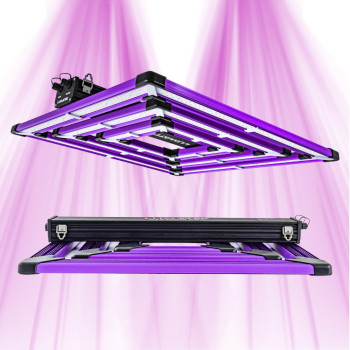
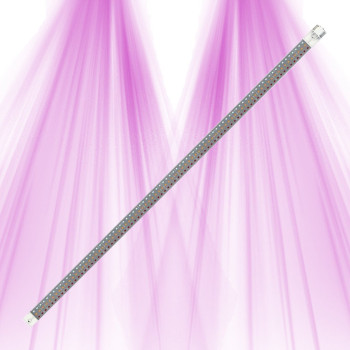
Secret Jardin Cosmorrow 40 W 90 cm – Blüte-LED-Leiste
In 2 Modellen erhältlich
Versand innerhalb von 2 Wochen
55,00 € oder 3× 18,33 €

Artikel wurde in den Korb gelegt
Ça pousse dans le bon sens

30 Produkte
Lighting for small grow spaces is an art form. When you only have a 60x60cm cabinet or a closet corner, every watt counts, and heat quickly becomes a problem. LEDs specifically designed for these compact setups offer the perfect balance between light output and thermal management. Say goodbye to HPS lamps that turn your space into a sauna!
In a small volume, energy efficiency isn't just about saving money—it's a technical necessity. A poorly adapted lamp guarantees overheating, not to mention skyrocketing electricity bills to cool everything down.
LEDs are revolutionizing cultivation in confined spaces thanks to their exceptional luminous efficiency. Where a 250W HPS heats up like a radiator, a 150W LED produces more useful photons while remaining cool to the touch. We're talking about efficiencies of 2.5 to 3.0 µmol/J compared to 1.7 µmol/J for traditional technologies.
Heat management is where it all changes. In a 0.5m² space, every extra degree counts. Modern LEDs integrate high-performance heat sinks and silent fans that dissipate heat without making noise. The result: stable temperature, no thermal stress for the plants, and you sleep soundly.
Another major advantage is the flexibility of the light spectrum. Full-spectrum LEDs cover all growth phases with a single fixture. No more juggling between MH and HPS depending on the period—a real space-saver and simpler setup for small grows.
The golden rule: count 30 to 50 actual watts per square foot (0.09m²) for LED. In a 60x60cm space, aim for between 100 and 180W depending on your ambitions. Manufacturers often advertise the HPS equivalent power, but always look at the actual consumption—that's what matters for your electrical installation.
Ceiling height determines the type of fixture. Less than 120cm high? Opt for ultra-flat LED panels or modular LED bars. Between 120 and 150cm, compact lamps with integrated reflectors work perfectly. Beyond that, you have more freedom, but pay attention to light uniformity.
Passive or active cooling is a crucial choice. Passive models (without a fan) are silent but require more space around the heat sinks. Versions with integrated fans are more compact but generate a slight noise—usually 25 to 35 dB, which is less than an air extractor.
Also consider ease of installation. In a small space, you don't have room for complex suspension systems. Prioritize lamps with direct ceiling mounting or height-adjustable rail systems.
For a 60x60cm space, count between 100 and 150W of actual LED power for efficient cultivation. If you're aiming for maximum yields, go up to 180W but plan for reinforced air extraction. In a 40x40cm closet, 80 to 100W is more than enough. The classic mistake: oversizing and ending up with heat problems. It's better to start modest and adjust based on results.
The key is air extraction coupled with an efficient LED. Install an extractor of at least 100 to 150 m³/h with a direct exhaust duct to the outside. Position the lamp at least 30cm from the walls to allow air circulation. LEDs with oversized heat sinks or integrated fans help tremendously. Absolutely avoid low-end models that heat up like HPS—you'll quickly regret it.
In a small volume, the difference is huge. A 250W HPS emits 850 BTU/h of heat compared to 400 BTU/h for an equivalent 150W LED. In terms of light output, the LED produces 2.5 µmol/J compared to 1.7 µmol/J for HPS. The result: less heat, lower electricity consumption, no bulky ballast, and a 3 times longer lifespan. In small spaces, LED is the undisputed choice.
With LED, start at 45-50cm from the top of the plants and adjust according to their reaction. If the top leaves curl or whiten, raise it by 10cm. If they stretch towards the light, move it closer by 5cm. Modern LEDs allow you to go down to 25-30cm without burning, but always monitor the temperature at leaf level. An infrared thermometer helps you control precisely.
During the growth phase, 18 hours of light and 6 hours of darkness yield excellent results. Some growers push up to 20h/4h to accelerate growth, but be mindful of the electricity bill. For flowering, it's essential to switch to 12h/12h—this is the signal that triggers flower production. Strictly adhere to these cycles with a reliable timer; plants dislike schedule variations.
In 2 Modellen erhältlich
In 2 Modellen erhältlich
In 2 Modellen erhältlich
In 3 Modellen erhältlich
In 2 Modellen erhältlich
Hilfe & Beratung
Zu Small spaces — klicken Sie auf eine Frage, um die Antwort zu sehen.
Für einen Raum von 60x60cm (ca. 0,36 m²) empfehle ich in der Regel eine tatsächliche LED-Leistungsaufnahme von 100 bis 150 Watt. Ziel ist es, eine ausreichende PPFD (Photosynthetische Photonenflussdichte) zu erreichen, ohne zu viel Wärme zu erzeugen. Ich bevorzuge immer die Qualität der Chips und des Treibers gegenüber der bloßen angegebenen Leistung.
Der ideale Abstand Ihrer LED-Lampe hängt von ihrer Leistung und der von ihr abgegebenen Lichtintensität ab. Für kleine Räume beginne ich oft damit, die Lampe 30-45 cm über den jungen Trieben zu platzieren und passe sie dann schrittweise an. Die Idee ist, Ihre Pflanzen genau zu beobachten: Wenn die Blätter gelb werden oder sich kräuseln, ist das Licht möglicherweise zu nah. Ziel ist es, eine homogene Lichtverteilung zu erzielen, ohne die Pflanzen zu verbrennen.
Die Anzahl der Lichtstunden hängt von der Lebensphase Ihrer Pflanzen ab. Im vegetativen Wachstum empfehle ich in der Regel einen Zyklus von 18 Stunden Licht und 6 Stunden Dunkelheit. Für die Blüte ist ein Zyklus von 12 Stunden Licht und 12 Stunden Dunkelheit für die meisten Pflanzen Standard. Diese Zyklen sind entscheidend für die hormonelle Entwicklung der Pflanzen.
Der häufigste Fehler, den ich sehe, ist die Unterschätzung der Wärmeentwicklung, selbst bei LEDs, und die Vernachlässigung der Belüftung. Ein weiterer Fehler ist, die Lampe zu nah an den Pflanzen zu platzieren, was zu Lichtstress führt. Schließlich ist die Wahl einer LED von schlechter Qualität oder mit einem ungeeigneten Spektrum eine Falle. Ich rate immer dazu, von Anfang an in gute Qualität zu investieren, um Enttäuschungen zu vermeiden.
Für einen kleinen Raum zögere ich keine Sekunde: Es ist zweifellos die LED. HPS-Lampen erzeugen eine kolossale Wärme, die in einem begrenzten Volumen ohne ein überdimensioniertes Abluftsystem kaum zu handhaben ist. LEDs sind energieeffizienter, erzeugen weniger Wärme und ermöglichen eine präzisere Spektrumkontrolle, was ideal ist, um jeden Quadratzentimeter Ihres Anbaus zu optimieren.
Viele moderne LEDs für kleine Räume bieten einstellbare Spektren. Für das Wachstum bevorzuge ich ein Spektrum, das reicher an blauem Licht ist, was eine kompakte und robuste vegetative Entwicklung fördert. In der Blüte erhöhe ich den Anteil an rotem Licht, das für die Produktion von Blüten und Früchten unerlässlich ist. Einige Modelle verfügen sogar über spezielle 'Veg'- und 'Bloom'-Schalter, um diese Anpassung zu vereinfachen.
Ihre Antwort nicht gefunden? 01 88 33 45 52 oder per Nachricht.

Umtausch innerhalb
von 14 Tagen

Kostenloser Versand
ab 100€*

Lieferung
in 24 bis 48 Stunden

Sichere
Zahlung

Zahlungserleichterung

Bestpreisgarantie

GrowLED
Garantie

Treuepunkte