





























Horticulture Lighting Group
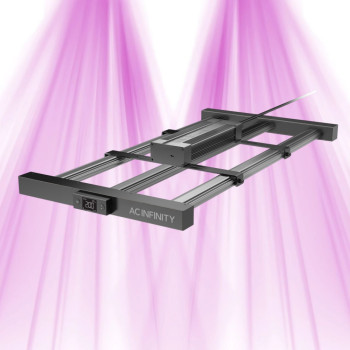
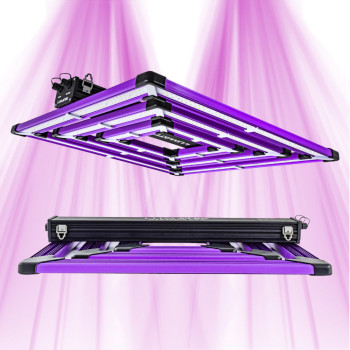
HLG 300L Rspec – High-End-LED-Gartenbaubeleuchtung – Samsung LM301H LEDs
Versand innerhalb von 2 Wochen
657,48 € oder 3× 219,16 €

Artikel wurde in den Korb gelegt
Ça pousse dans le bon sens

19 Produkte
300W wattage LEDs represent the sweet spot for many indoor growers. With this power, you can effectively cover an area of 80x80 to 100x100 cm depending on the model, while maintaining reasonable electricity consumption. This format is rapidly gaining popularity among growers who want serious results without skyrocketing their electricity bill.
Unlike old 400W HPS lights that heated up like radiators, a modern 300W LED emits much less heat while offering an optimized full spectrum. We're talking about a photosynthetic efficiency that can reach 2.7 µmol/J on the best models with Samsung or Osram chips.
Frankly, the 300W LED is the format that fits most home setups. You can grow 4 to 6 plants in 11L pots in an 80x80 tent, or even push up to 9 plants in SOG in smaller pots. Versatility is what matters.
In terms of consumption, we're looking at around 300W actual draw from the wall (sometimes less on efficient models), which is about 7.2 kWh per day over 24 hours. Compare that to a 400W HPS that draws 450W actual with the ballast... The math is simple. And we haven't even talked about not needing to run the AC as much in the summer.
The modern full spectrum integrates UV-A (365-400nm) and near-infrared (730nm) which really boost terpene production and bud density. The old purple blurples are gone. Now we have true white light with peaks in deep red (660nm) and blue (450nm).
First criterion: the LED chips used. Samsung LM301B, LM301H or Osram, these are high-end chips that last. Avoid no-name Chinese chips that lose 30% of their intensity in 6 months. A good 300W LED with Samsung chips retains 90% of its power after 50,000 hours.
Second crucial point: the driver. Meanwell is the benchmark. A Meanwell HLG or ELG driver guarantees stable power supply and surge protection. This is not the time to cut corners on this component.
For coverage area, count 300W for 0.8 to 1m² for intensive flowering. If you only want to grow, you can go up to 1.2m². And check the PPFD carefully: you need a minimum of 800 µmol/m²/s in the center for proper flowering, ideally 1000-1200 µmol/m²/s.
Last point: heat dissipation. LED bars with aluminum heatsinks are more efficient than compact panels. You gain in longevity and performance. And if it's dimmable, it's even better for adjusting intensity according to the growth stage.
In an 80x80 tent, you can grow 4 plants in 11L pots for SCROG, or up to 9 plants in SOG with 6L pots. It all depends on your growing method. With LST and 4 plants, you optimize space and light penetration. With SOG and 9 plants, you shorten the growth time but have more plants to manage. The 300W LED perfectly covers this area with a homogeneous PPFD between 800 and 1200 µmol/m²/s depending on the distance.
Start at 60-70 cm during vegetative growth and gradually move closer to 40-50 cm during flowering. With modern LEDs, the risk of thermal burn is low, but be careful of light burn: the top leaves yellowing and curling. If this happens, raise it by 10 cm. Sativa varieties generally tolerate more intensity than indicas. Use a lux meter or a smartphone app to measure: 30,000 to 50,000 lux during growth, 50,000 to 80,000 lux during flowering.
Absolutely, full spectrum 300W LEDs perfectly handle the entire cycle. The blue spectrum (400-500nm) stimulates vegetative growth and leaf formation, while the red (620-700nm) triggers flowering and boosts resin production. Recent models even integrate UV-A (365-400nm) which increases terpene production, and infrared (730nm) which improves light penetration. You can go from seed-to-harvest with a single lamp, unlike old MH/HPS where you had to change bulbs.
Look at the energy efficiency expressed in µmol/J: a basic LED runs around 2.0-2.2 µmol/J, while a Samsung LM301H reaches 2.7-3.0 µmol/J. In concrete terms, you produce 30% more photons for the same consumption. Samsung chips also have better chromatic stability: the spectrum does not drift with age. In terms of lifespan, count 100,000 hours for Samsung versus 50,000 hours for generic. Over 5 years of use, the electricity savings largely offset the initial extra cost.
A quality 300W LED with Samsung or Osram chips easily lasts 80,000 to 100,000 hours, or 10-12 years with 12 hours/day use. To maximize its longevity, ensure good ventilation: the heatsink temperature should not exceed 60°C. Clean the heatsinks every 3 months with a dry brush to prevent dust accumulation that impairs cooling. Avoid repeated on/off cycles that stress the drivers. If your LED is dimmable, always start at low intensity then gradually increase. Good maintenance can easily add 20,000 hours of extra life.
Hilfe & Beratung
Zu 300W — klicken Sie auf eine Frage, um die Antwort zu sehen.
Der Unterschied ist enorm, und deshalb sind 300W LEDs so beliebt! In der Praxis kann eine 300W LED eine 400W HPS übertreffen, was den nutzbaren Lichtstrom für Pflanzen angeht, und dabei weniger Energie verbrauchen. LEDs erzeugen viel weniger Wärme, was die Klimaregelung deines Anbauraums vereinfacht und das Risiko von Hitzestress für deine Pflanzen reduziert. Darüber hinaus bieten LEDs ein präziseres und oft einstellbares Lichtspektrum, was bei HPS nicht der Fall ist. Ich lade dich ein, diesen Artikel zu lesen, der den Übergang von HPS zu LEDs behandelt.
Im Allgemeinen ist eine 300W LED ideal, um eine Fläche von 80x80 cm bis 100x100 cm abzudecken. Dies hängt natürlich vom spezifischen Modell der Lampe, ihrer Optik und ihrer Effizienz ab. Für eine optimale Abdeckung empfehle ich dir, immer die Empfehlungen des Herstellers zu überprüfen. Was ich oft sehe, ist, dass es für größere Flächen manchmal besser ist, zwei LEDs mit geringerer Leistung oder eine einzelne LED mit höherer Leistung zu verwenden, um eine homogenere Lichtverteilung zu erzielen.
Der Installationsabstand einer 300W LED ist entscheidend und hängt von der tatsächlichen Leistung deiner Lampe, ihrer Optik und dem Entwicklungsstadium deiner Pflanzen ab. Im Allgemeinen empfehle ich, mit einem Abstand von 40 bis 60 cm während des Wachstums zu beginnen und ihn während der Blüte auf 30 bis 45 cm anzupassen. Es ist wichtig, deine Pflanzen genau zu beobachten, um Anzeichen von Lichtstress (gelbe oder gekräuselte Blätter) zu erkennen und die Höhe entsprechend anzupassen. Zögere nicht, das technische Datenblatt deines Modells zu konsultieren, wie den Vergleich zwischen der Calitek Quantum Bears 340W und der Lumatek ATS 300W Pro, für spezifische Empfehlungen.
Ja, absolut! Die meisten modernen 300W LEDs sind mit einem Vollspektrum ausgestattet, was sie perfekt für alle Phasen des Anbaus macht, von der Keimung bis zur Blüte. Einige Modelle bieten sogar die Möglichkeit, das Spektrum zu modulieren, um das Licht für das vegetative Wachstum (mehr Blau) oder für die Blüte (mehr Rot) zu optimieren. Wenn ich wählen müsste, würde ich immer ein Modell mit Vollspektrum bevorzugen, wegen seiner Vielseitigkeit und seiner Fähigkeit, das Potenzial deiner Pflanzen in jeder Phase zu maximieren.
Ein häufiger Fehler ist, die Lampe zu nah an den Pflanzen zu platzieren, in der Annahme, die Intensität zu erhöhen, was zu Bleichen oder Verbrennungen führen kann. Ich rate immer, höher zu beginnen und schrittweise anzupassen. Ein weiterer Fehler ist die Vernachlässigung der Belüftung. Auch wenn LEDs weniger Wärme erzeugen als HPS, ist eine gute Luftzirkulation für die Gesundheit der Pflanzen und zur Vermeidung von Feuchtigkeitsansammlungen unerlässlich. Unterschätze schließlich nicht die Bedeutung eines guten Lichtzyklus; LEDs ermöglichen eine hohe Präzision, also nutze sie weise, um Wachstum und Blüte zu optimieren.
Ihre Antwort nicht gefunden? 01 88 33 45 52 oder per Nachricht.

Umtausch innerhalb
von 14 Tagen

Kostenloser Versand
ab 100€*

Lieferung
in 24 bis 48 Stunden

Sichere
Zahlung

Zahlungserleichterung

Bestpreisgarantie

GrowLED
Garantie

Treuepunkte