Aller au contenu principal
0 to 100W
52 produits

0 to 100W

Horticultural LEDs 0 to 100W: The Perfect Lighting to Get Started

Horticultural LEDs from 0 to 100W represent the ideal entry point into LED lighting for indoor cultivation. This power range perfectly covers the needs of small setups, cloning spaces, and supplemental lighting. Unlike larger panels of 200W and more, these models offer remarkable...

Horticultural LEDs 0 to 100W: The Perfect Lighting to Get Started

Horticultural LEDs from 0 to 100W represent the ideal entry point into LED lighting for indoor cultivation. This power range perfectly covers the needs of small setups, cloning spaces, and supplemental lighting. Unlike larger panels of 200W and more, these models offer remarkable flexibility to precisely target your growing areas without overheating the space.

Why choose 0 to 100W LEDs for your grow

This power range offers unique advantages that experienced growers particularly appreciate. First, power consumption remains controlled – a 50W panel actually consumes 50W, unlike older HPS lights that claimed 250W but often drew more. The heat generated remains very manageable, which avoids overheating problems in small grow spaces.

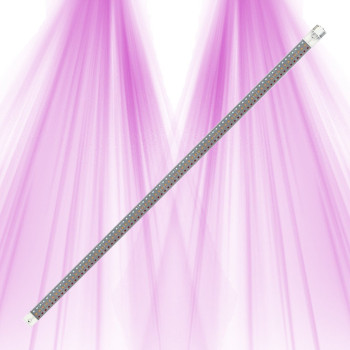
Night lighting for your plants - LED strip - 9W per meter - 1m perfectly illustrates this versatility. This type of LED strip allows for targeted lighting during critical phases, resists the high humidity of grow spaces, and can be easily placed wherever you need it. It's exactly what you need to maintain a stable light cycle without investing in a large system.

Modularity is another major asset. You can combine several small units to create custom lighting, adjust the intensity according to your plants' needs, and even create differentiated lighting zones within the same space. Frankly, that's where it changes everything for growers who want to optimize every square inch.

How to choose your 0-100W LED

The choice primarily depends on your growing area and the type of plants cultivated. For a 30x30cm area, a 30-50W panel is more than sufficient. If you're aiming for 60x60cm, opt for 80-100W. The general rule: count about 30-50W per square foot (0.09m²) for effective primary lighting.

The light spectrum deserves special attention in this range. Full spectrum models (380-780nm) offer more versatility, while targeted red/blue spectra are better suited for specific phases. Also check for the presence of UV and infrared – even in small quantities, they significantly improve the final quality.

Heat dissipation remains crucial, even at these moderate power levels. Prioritize models with aluminum heat sinks and passive ventilation. Samsung LM301B LEDs or equivalent guarantee a luminous efficacy greater than 2.5 µmol/J, which translates to less heat and more useful photons.

Frequently Asked Questions

What LED wattage should I choose between 0 and 100W to illuminate 1m² for indoor growing?

For 1m² of cultivation, aim for 80-100W of actual LED power in this range, which is equivalent to 2-3 30-40W panels distributed evenly. This power ensures approximately 300-400 µmol/m²/s at plant level, which is the minimum for proper growth. If your budget allows, combine several units rather than a single large panel – the light distribution will be more homogeneous. Remember that 100W of LED is equivalent to about 250W of HPS in terms of light output.

What distance should I install between my 50-100W LED and the plants?

The optimal distance varies depending on the exact power and the growth phase. For a 50W panel, maintain 25-35cm during vegetative growth and 20-30cm during flowering. With 100W, increase to 35-45cm during vegetative growth and 30-40cm during flowering. Monitor for signs of light stress: leaves bleaching or curling upwards. A lux meter or PAR meter will give you precise measurements – aim for 200-400 µmol/m²/s during vegetative growth and 400-600 µmol/m²/s during flowering. Adjust gradually, especially with young plants.

Do LEDs in this category get very hot, and how do I manage the temperature?

0-100W LEDs generate significantly less heat than equivalent HPS systems – expect about 60-70% of the consumed power to be converted into heat. A 100W actual panel will heat up like a 60-70W heater, which is very manageable. Passive ventilation is often sufficient in this range, but adequate air extraction remains essential. Maintain 5-10cm of free space above the panels for dissipation. In summer, a fan directed towards the LED heat sinks significantly improves their lifespan.

How do I adjust the light spectrum on a 0-100W LED for growth or flowering?

Most LEDs in this range offer fixed full-spectrum options suitable for all phases. If your model has separate channels, prioritize blue (400-500nm) and white during vegetative growth to promote a compact structure. During flowering, increase the proportion of red (660nm) and far-red (730nm) to stimulate production. Models with dimmers allow you to adjust the overall intensity: 40-60% during vegetative growth, 80-100% during flowering. Avoid 100% red/blue spectra, which can be harsh on the eyes – full-spectrum is more practical for daily use.

What is the lifespan of a 100W horticultural LED, and does it require maintenance?

A quality LED in this range typically has a lifespan of 50,000 operating hours, which is about 5-7 years of intensive use (12-18 hours/day). Light degradation remains gradual – after 30,000 hours, you lose about 10-15% of intensity. Maintenance is limited to monthly dusting of the heat sinks and cleaning the optics with a dry cloth. Regularly check connections and avoid overly frequent on/off cycles, which prematurely wear out drivers. A clean environment and stable temperature significantly extend the lifespan.


Es werden 37 - 48 von 52 Artikeln angezeigt
Wie wähle ich eine Gartenbau-LED von 0 bis 100W aus?
   

Um eine Gartenbau-LED in diesem Leistungsbereich auszuwählen, empfehle ich Ihnen, zuerst den genauen Verwendungszweck zu definieren: Stecklinge, Aussaat, Zusatzbeleuchtung oder eine kleine Wachstumszone. Achten Sie dann auf die vom Hersteller angegebene Abdeckungsfläche und vergleichen Sie diese mit Ihrem Platzangebot. Bevorzugen Sie schließlich Modelle mit einem guten Lichtspektrum (Full Spectrum) und einer hohen Lichtausbeute (PPF/W), um das Pflanzenwachstum zu optimieren.

Welche Leistung sollte eine Gartenbau-LED für den Anfang haben?
   

Für den Anfang, insbesondere auf kleinen Flächen oder für spezielle Anwendungen wie die Stecklingsvermehrung, ist eine Gartenbau-LED von 20W bis 50W oft ausreichend. Wenn Sie eine kleine Wachstumszone für einige Pflanzen anstreben, kann eine 75W oder 100W ein ausgezeichneter Ausgangspunkt sein. Die Idee ist, nicht zu überdimensionieren, um Überhitzung und unnötigen Verbrauch zu vermeiden.

Was ist der Unterschied zwischen einer Gartenbau-LED und einer klassischen LED?
   

Der Hauptunterschied liegt im emittierten Lichtspektrum. Eine klassische LED ist für das menschliche Auge optimiert und enthält viel Grün. Eine Gartenbau-LED hingegen ist für Pflanzen konzipiert und emittiert spezifische Wellenlängen (hauptsächlich Blau und Rot, aber auch Grün und Fernrot im Full Spectrum), die für die Photosynthese unerlässlich sind. Das macht den entscheidenden Unterschied für das Pflanzenwachstum aus.

Wozu dient eine Full-Spectrum-Gartenbau-LED?
   

Eine Full-Spectrum-Gartenbau-LED wurde entwickelt, um das natürliche Sonnenlicht bestmöglich nachzuahmen und den Pflanzen alle Wellenlängen zu liefern, die sie für jede Phase ihrer Entwicklung benötigen, von der Keimung bis zur Blüte. Dies fördert ein ausgewogenes Wachstum, eine bessere Chlorophyllproduktion und letztendlich optimale Erträge. Es ist eine vielseitige Wahl, die ich für die meisten Kulturen sehr empfehle.

Welche Gartenbau-LED für kleine Indoor-Anbauflächen?
   

Für eine kleine Indoor-Anbaufläche empfehle ich eine Gartenbau-LED von 50W bis 100W, abhängig von der genauen Größe Ihres Raumes (z.B. ein Bereich von 40x40cm bis 60x60cm). Wichtig ist, dass die Lichtabdeckung über die gesamte Fläche homogen ist. Kompakte und einstellbare Modelle sind besonders gut geeignet, um den Platz zu optimieren.

Wie installiere ich eine Gartenbau-LED-Lampe von 0-100W?
   

Die Installation ist in der Regel einfach. Ich empfehle Ihnen, Ihre LED-Lampe mit den mitgelieferten Kabeln und Haken über Ihren Pflanzen aufzuhängen und dabei auf Stabilität zu achten. Stellen Sie sicher, dass sich eine Steckdose in der Nähe befindet und, wenn möglich, ein Timer zur Automatisierung der Lichtzyklen. Es ist entscheidend, den empfohlenen Abstand zwischen Lampe und Pflanzen einzuhalten, den ich gleich erläutere.

Welchen Abstand sollte eine Gartenbau-LED zu Pflanzen haben?
   

Der ideale Abstand variiert je nach Leistung Ihrer LED und dem Wachstumsstadium Ihrer Pflanzen. Für LEDs von 0 bis 100W beginne ich normalerweise mit einem Abstand von 30 bis 45 cm für Sämlinge und junge Triebe, dann kann ich ihn für das vegetative Wachstum und die Blüte auf 20-30 cm reduzieren. Beobachtung ist der Schlüssel: Wenn die Blätter gelb werden oder sich kräuseln, ist das Licht zu intensiv; wenn die Pflanzen vergeilen, ist es zu weit entfernt. Zögern Sie nicht, die spezifischen Empfehlungen des Herstellers Ihrer Lampe zu konsultieren.

Ist eine 100W Gartenbau-LED für Autoflowering geeignet?
   

Ja, eine 100W Gartenbau-LED kann für den Anbau von ein oder zwei Autoflowering-Pflanzen auf einer kleinen Fläche durchaus geeignet sein. Autoflowering-Pflanzen benötigen keine extreme Lichtintensität und ihr Lebenszyklus ist kürzer. Eine gut positionierte 100W Full-Spectrum-LED liefert ihnen genügend Licht für eine gesunde Entwicklung und eine gute Ernte. Weitere Informationen zu verschiedenen Technologien finden Sie in diesem Artikel über LED-Gartenbaubeleuchtung: Future of Grow Fog.

Beste Gartenbau-LED 0-100W für Stecklinge?
   

Für Stecklinge bevorzuge ich eine Gartenbau-LED mit einem blau-orientierten Spektrum, da diese Farbe die Wurzelbildung und ein kompaktes vegetatives Wachstum fördert. Eine Leistung von 20W bis 50W ist für einen kleinen Stecklingsbereich in der Regel mehr als ausreichend. Wichtig ist ein sanftes, aber konstantes Licht, um die jungen Triebe nicht zu stressen. Ein Modell mit einem guten Lichtdiffusor ist ein Pluspunkt für eine homogene Abdeckung.

Blog navigation

Neueste Beiträge

Welche Leistung braucht eine LED-Pflanzenlampe für Grow-Einsteiger?

Welche Watt-Leistung braucht eine LED-Pflanzenlampe zum Einstieg? Echte Watt, W/m², PPFD, 60x60-Fläche: der...

Lire la suite
VIVOSUN Grow Cam 6mm 2K QHD WiFi-Kamera für deine Pflanzenzucht

Hast du auch keinen Bock mehr auf die Panik, wenn du mal nicht bei deinen Pflanzen bist? Mit der VIVOSUN Grow Cam 6mm...

Lire la suite
STOP à la Tourbe ! Découvrez les 4 Meilleurs Substrats Écologiques pour une Culture Indoor Explosive

Le monde du jardinage connaît une transformation silencieuse mais profonde. Face à l'urgence climatique et à la prise...

Lire la suite
    Umtausch LED-Pflanzenlicht innerhalb von 30 Tagen

    Umtausch innerhalb
    von 14 Tagen

    Kostenloser Versand von LED-Pflanzenlampen

    Kostenloser Versand
    ab 100€*

    Schnelle Lieferung von LED-Pflanzenlampen

    Lieferung
    in 24 bis 48 Stunden

    Sichere
    Zahlung

    Zahlung in 3 Raten ohne Gebühren für LED-Pflanzenlampen

    Zahlungserleichterung

    Bestpreisgarantie für LED-Pflanzenlampen

    Bestpreisgarantie

    Garantie für LED-Pflanzenlampen

    GrowLED
    Garantie

    Treuepunkte für LED-Pflanzenlampen

    Treuepunkte