

































Biobizz
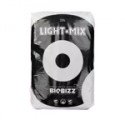
BioBizz All-Mix 20 L – vorgedüngte Pflanzerde
In 3 Modellen erhältlich
Auf Lager · Versand innerhalb von 24 Std.
28,90 €

Artikel wurde in den Korb gelegt
Ça pousse dans le bon sens

74 Produkte
Soil is literally the foundation of your indoor grow. Contrary to popular belief, not all soils are created equal when it comes to growing indoors. From drainage, pH, fertilization, and structure, every parameter counts to obtain vigorous plants and harvests that meet your expectations.
Indoor growing imposes specific constraints that classic garden soils cannot handle. First, drainage: in a pot, stagnant water quickly becomes problematic. A good indoor soil incorporates draining elements like perlite or vermiculite, which allow roots to breathe while retaining necessary moisture.
Then there's the question of pH. Most plants grown indoors prefer a slightly acidic pH, between 6.0 and 6.8. Specialized soils are formulated to maintain this optimal range, unlike universal soils which can drift towards alkalinity.
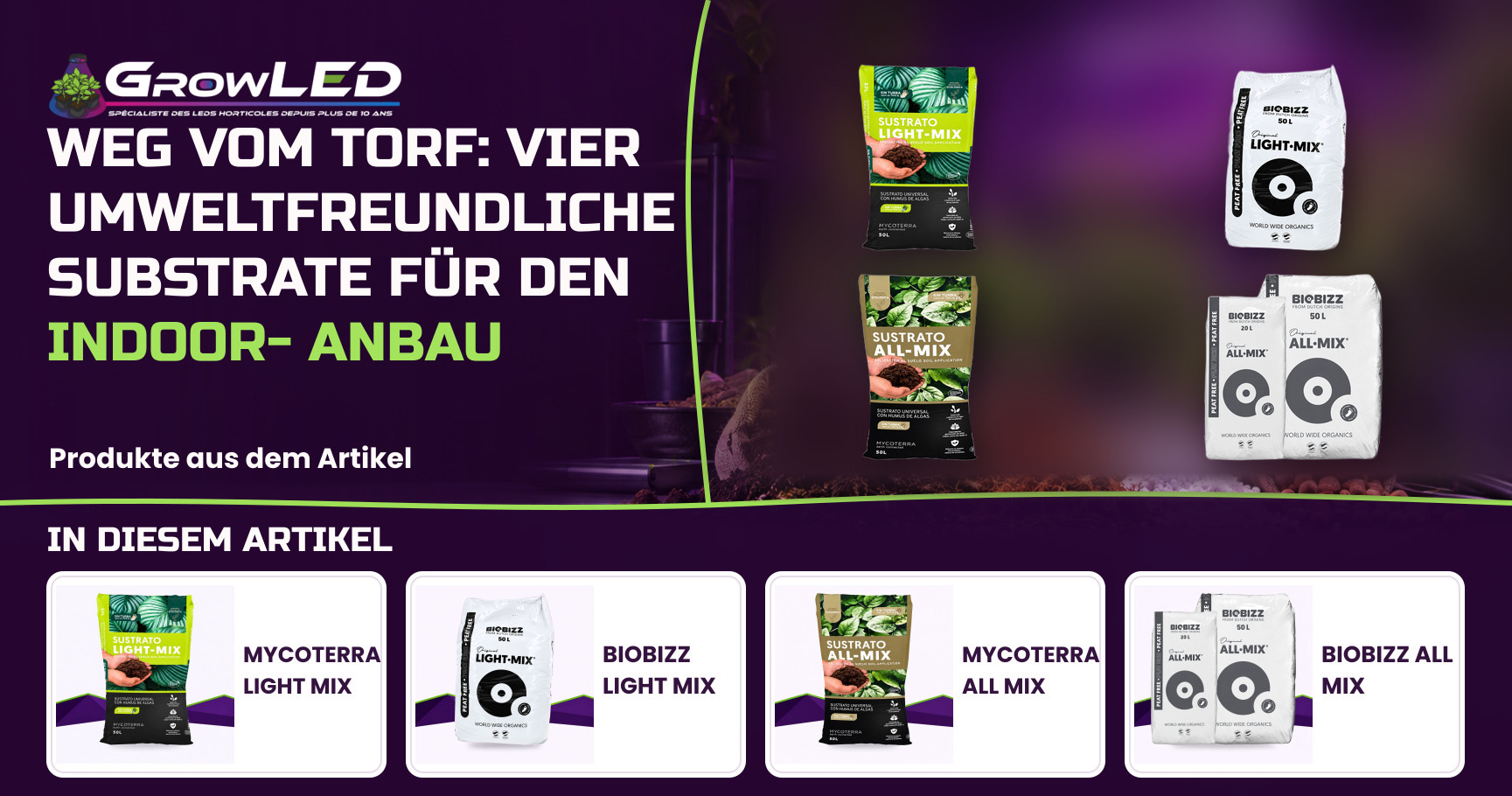
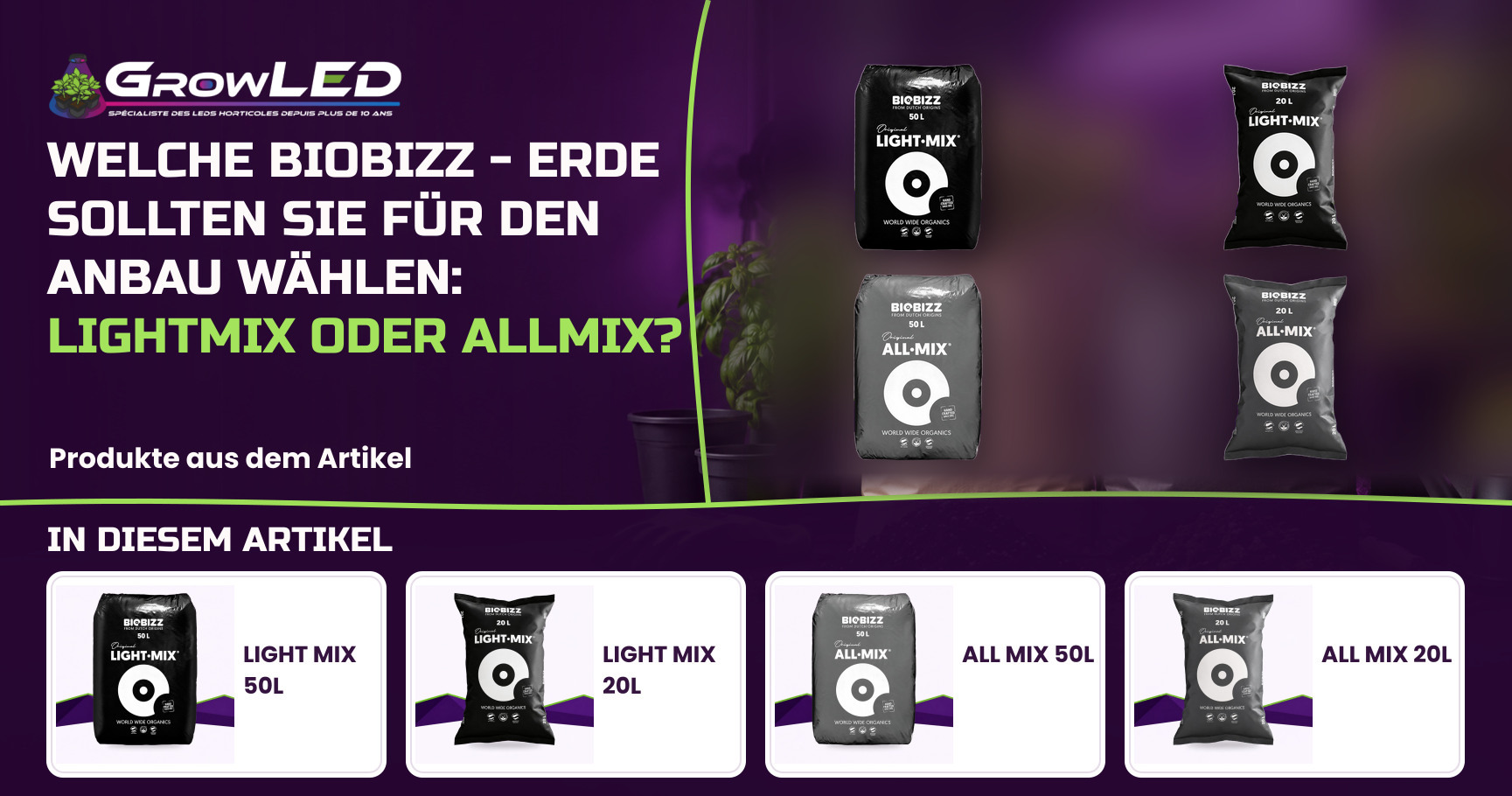
Regarding nutrition, that's where it gets interesting. You have two schools: "Light Mix" soils, lightly fertilized, perfect for precisely controlling your plants' feeding, and pre-fertilized "All Mix" soils that nourish for 4 to 6 weeks. Each approach has its advantages depending on your experience level and growing method.
For beginners, an All Mix soil often represents the best compromise. Pre-fertilized with organic fertilizers, it nourishes plants during their first weeks of life without risk of over-fertilization. The composition is balanced: blond peat, compost, perlite, and a cocktail of organic fertilizers precisely dosed.
More experienced growers often prefer Light Mix. Less loaded with nutrients, they allow total control of feeding from the start. This is particularly useful if you use specific liquid fertilizers or if you want to adapt nutrition according to growth phases.
Regarding texture, look for a soil that remains aerated even after watering. A good mix contains about 20 to 30% perlite or draining elements. Too compact, your soil will retain water and promote root rot. Too draining, you will have to water every day.
For seedlings and cuttings, always prefer a light soil or special seedling soil. Young roots are fragile and do not appreciate high concentrations of fertilizers that can "burn" them.
For seedlings, absolutely avoid All Mix, which is too rich in nutrients for young shoots. A Light Mix or a special seedling soil is essential: these substrates contain just enough nutrients for the first few weeks without risking burning fragile roots. The fertilizer concentration of an All Mix (EC around 1.2-1.4) can literally kill a seedling, whereas a Light Mix peaks at 0.8 EC. Wait until your plants have at least 3-4 sets of true leaves before switching to a richer substrate.
Drainage is 50% of the success in indoor growing. Even with good soil, add 10 to 20% extra perlite if you water often or if your space is humid. At the bottom of your pots, place a 2-3 cm layer of clay pebbles: this prevents the drainage holes from getting clogged with soil. Always check that water drains well after watering – if it stagnates for more than 30 minutes in the saucer, your drainage is not sufficient. Well-drained soil should dry on the surface in 2-3 days maximum.
For beginners, All Mix is safer because it is more forgiving of fertilization errors. For 4 to 6 weeks, you only need to water with plain water, which greatly simplifies management. Light Mix requires more rigor: you have to start fertilizers from the 2nd week and dose them well according to the plant's needs. However, if you want to learn and progress quickly, Light Mix forces you to understand your plants' nutritional needs. It's more technical but more educational in the long run.
With geotextile pots, start by placing them on their final support because they become heavy once filled. Fill in thirds, tamping lightly at each step – not too hard, just to avoid air pockets. Leave 3-4 cm of margin at the top to facilitate watering. The soil will settle naturally with the first waterings, which is normal. The advantage of geotextile pots is that the roots can "breathe" through the fabric, which compensates for slight over-tamping. Water gently the first time to thoroughly moisten the entire volume.
Quality All Mix soil generally nourishes for 4 to 6 weeks, depending on the size of your pots and the growth rate of your plants. The first signs of deficiency appear on the lower leaves: yellowing, then browning of the tips. This is the signal to start liquid fertilization. In 11L pots, count on 6 weeks, in 3L pots, rather 4 weeks – logically, more soil = more nutrient reserves. Always start with low doses (1/4 of the recommended concentration) then gradually increase according to your plants' reaction.
In 3 Modellen erhältlich
In 3 Modellen erhältlich
In 3 Modellen erhältlich
In 2 Modellen erhältlich
In 3 Modellen erhältlich
Hilfe & Beratung
Zu Soils — klicken Sie auf eine Frage, um die Antwort zu sehen.
Ich sehe oft, dass Anfänger jede beliebige Erde verwenden, aber im Indoor-Anbau macht eine spezialisierte Erde wirklich den Unterschied. Sie ist auf die spezifischen Bedürfnisse Ihrer Pflanzen unter künstlichem Licht abgestimmt, mit optimaler Drainage, guter Belüftung und einem stabilen pH-Wert. Dies verhindert Probleme mit Überwässerung oder Mangelerscheinungen, die bei herkömmlicher Erde häufig auftreten.
Das ist eine Frage, die ich sehr oft bekomme! Praktisch liegt der Hauptunterschied in ihrem Nährstoffgehalt. Eine Light-Erde ist wenig oder gar nicht gedüngt, ideal für Sämlinge oder junge Pflanzen, sodass Sie die volle Kontrolle über die Düngerzufuhr haben. Im Gegensatz dazu enthält eine angereicherte Erde Nährstoffe für mehrere Wochen, perfekt für Wachstum und Blüte, aber man muss vorsichtig sein, um nicht zu überdüngen.
Um die beste Erde auszuwählen, rate ich Ihnen, zuerst das Entwicklungsstadium Ihrer Pflanzen und Ihre Vorlieben bezüglich der Düngung zu berücksichtigen. Wenn Sie die Zufuhr kontrollieren möchten, ist eine Light-Erde perfekt. Wenn Sie eine einfachere Lösung bevorzugen, ist eine angereicherte Erde ausreichend. Ich achte auch auf die Zusammensetzung: Eine gute Indoor-Erde enthält oft Perlit oder Kokosfasern für Belüftung und Drainage.
Ich rate dringend davon ab, dieselbe Erde für mehrere Kulturen wiederzuverwenden. Nach dem ersten Gebrauch ist die Erde nährstoffarm, ihre Struktur ist abgebaut und sie kann Salzrückstände, sogar Krankheitserreger oder Insekteneier enthalten. Um die Gesundheit und Vitalität Ihrer neuen Pflanzen zu gewährleisten, ist frische Erde immer die beste Option.
Der häufigste Fehler, den ich sehe, ist die Überwässerung, oft verbunden mit einer zu kompakten Erde oder schlechter Drainage. Vermeiden Sie auch die Verwendung von ungeeigneter Gartenerde, die Krankheiten oder Schädlinge einschleppen kann. Vernachlässigen Sie schließlich nicht den pH-Wert: Eine Erde mit ungeeignetem pH-Wert kann die Nährstoffaufnahme Ihrer Pflanzen blockieren.
Für Cannabis-Sämlinge im Indoor-Anbau empfehle ich systematisch eine leichte und wenig gedüngte Erde, wie eine Light-Erde. Junge Pflanzen sind sehr empfindlich gegenüber Nährstoffüberschüssen. Ein zu reiches Substrat könnte die empfindlichen Wurzeln verbrennen. Wichtig ist eine gute Drainage und ausreichende Belüftung, um eine gute anfängliche Wurzelbildung zu fördern.
Die Wahl der Töpfe ist entscheidend bei der Verwendung von Erde. Ich rate dringend dazu, Töpfe mit guten Drainagelöchern zu verwenden, um Staunässe zu vermeiden, die eine Hauptursache für Probleme ist. Stofftöpfe sind eine ausgezeichnete Option, da sie die Belüftung der Wurzeln fördern und das Wurzelwachstum verhindern, aber auch Plastik- oder Terrakottatöpfe sind geeignet, vorausgesetzt, eine ausreichende Drainage ist gewährleistet.
Ihre Antwort nicht gefunden? 01 88 33 45 52 oder per Nachricht.

Umtausch innerhalb
von 14 Tagen

Kostenloser Versand
ab 100€*

Lieferung
in 24 bis 48 Stunden

Sichere
Zahlung

Zahlungserleichterung

Bestpreisgarantie

GrowLED
Garantie

Treuepunkte